Prerana Mulay

B2B / Product Design

Merchant Menu Setup

Optimizing Merchant Onboarding & Menu Management

Client

Amealio

Duration

2024 - 2025

Role

Product Designer

Deliverables

Merchant Research & Discovery, Menu Information Architecture
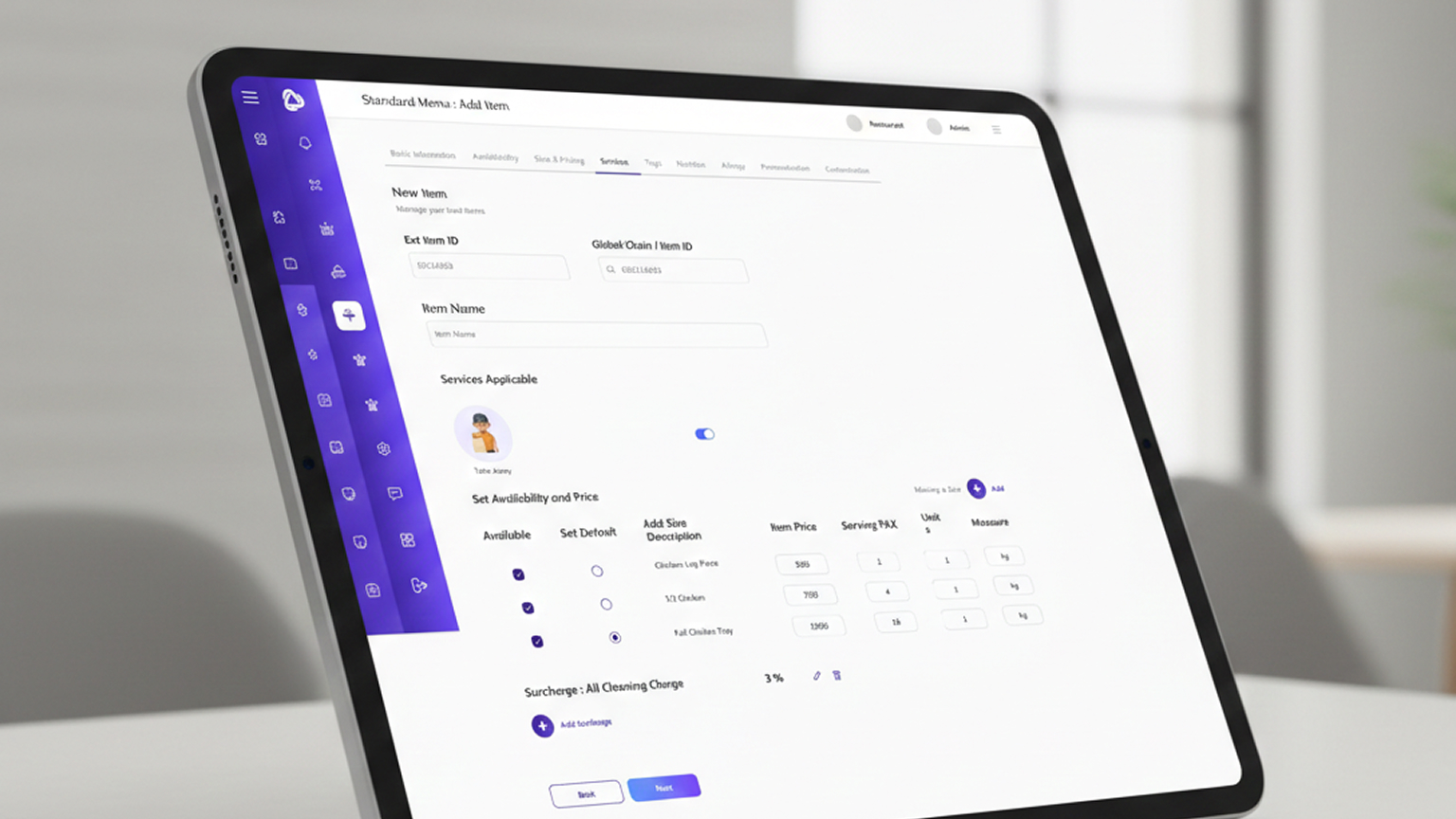
Merchant Menu Setup

Merchant Menu Setup

Project Context

As Amealio evolved from basic food listings into an experience-led platform, the merchant menu setup became a critical touchpoint determining the quality of the entire user experience.

Research & Discovery

Process

Comprehensive research combined quantitative data analysis with qualitative insights to understand both merchant behavior and user expectations.

Merchant Menu Data Quality Review:Analyzed existing merchant listings to identify common gaps and inconsistencies.
User Drop-off Analysis:Examined where users abandoned the food discovery process and why.
Industry Platform Comparison:Studied best practices from established food platforms and their menu structures.
Merchant Support Query Review:Identified the most frequent questions and pain points merchants encountered.

Interview Themes

Structured interviews covered critical areas including Portion Size confusion, Nutrition transparency, Service Context (dine-in vs delivery), and Dashboard anxiety.

Key Research Insights

Core Insight

A menu is not just a list of items—it's a decision-making interface that must adapt to user context and mental models.

Visual Cues Drive Decisions:Users rely heavily on photos; high-quality images significantly reduced time-to-decision.
Ambiguity Increases Anxiety:Unclear portion sizes and pricing created hesitation and low confidence.
Nutrition Builds Trust:Presence of nutritional info signaled platform credibility and merchant transparency.
Structure Over Freedom:Merchants preferred guided, structured forms over open-ended fields to reduce errors.
Context Changes Interpretation:Service context (dine-in vs delivery) fundamentally changed how users interpreted items.

Design Goals

Create Clear Structure:Help merchants build menus that are complete, organized, and easy to navigate.
Reduce User Ambiguity:Eliminate confusion around pricing, portions, and availability through structured data.
Support Multiple Contexts:Enable different service types while maintaining menu consistency and clarity.
Balance Flexibility:Maintain merchant flexibility without creating overwhelming complexity.
Improve Content Quality:Elevate listing completeness and accuracy without requiring manual moderation.

GUIDED WORKFLOW

The Solution: Redesigned Setup

Workflow Transformation

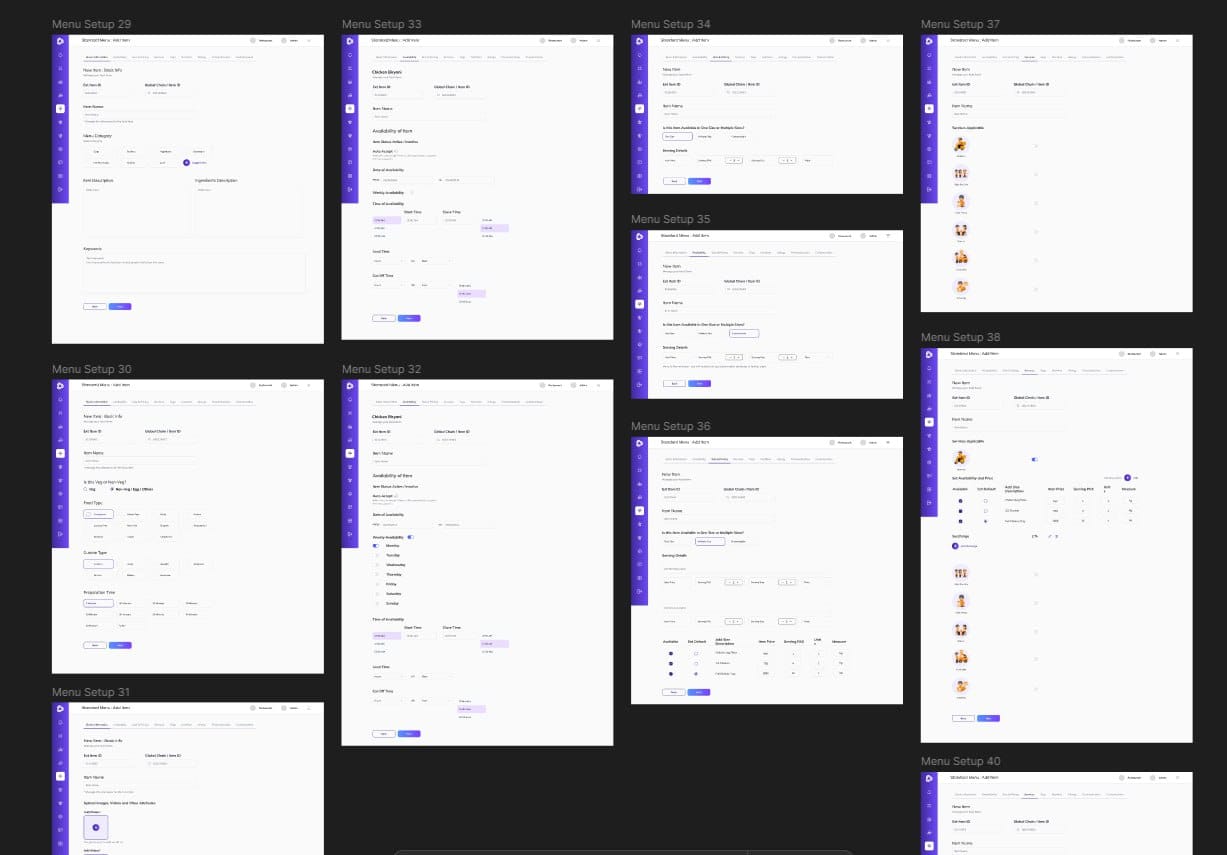
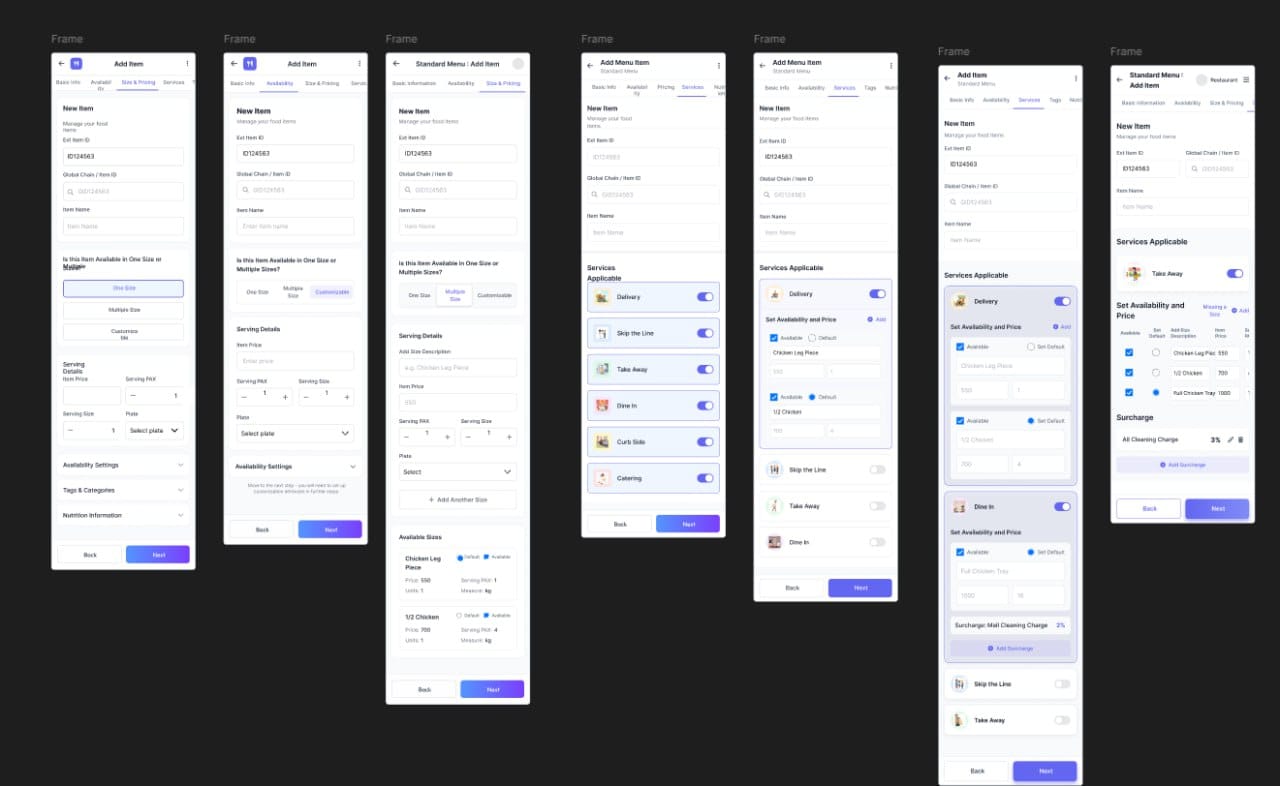
The menu setup flow was transformed from a single dense form into a guided, step-by-step system.

Reduced cognitive load while ensuring essential information was captured.
Balanced structure with flexibility, allowing customization while preventing errors.

Process Steps

1. Basic Details:Foundational item information.
2. Visual Content:High-quality imagery upload and management.
3. Pricing & Portions:Clear definition of sizes and costs.
4. Service Availability:Context-specific settings (Dine-in, Takeaway, etc.).
Measurable Impact

Measurable Impact

User Experience Improvements

Clearer food discovery with complete information.
Reduced ambiguity around pricing and portions.
Higher trust through visual and nutritional transparency.
Better filtering and recommendation accuracy.

Merchant Experience Improvements

Reduced confusion during menu creation.
Clearer expectations set upfront.
Improved listing completeness rates.
Fewer support queries and back-and-forth communication.
Key Learnings

Key Learnings

Takeaway

Designing menu setup is not about adding more fields—it's about deciding which information truly matters at the moment of choice.

Connecting Sides:Effective UX design serves both sides of a marketplace; merchant inputs directly drive user outcomes.
Constraints as Enablers:Thoughtfully designed constraints and guidance actually increase flexibility and merchant success.

Personal Growth

Learned to translate raw data into actionable design aligned with business goals.
Reinforced the value of taking ownership and iterating on loosely defined concepts.
Clarity, simplicity, and strong workflow are just as important as visual polish for data-heavy products.